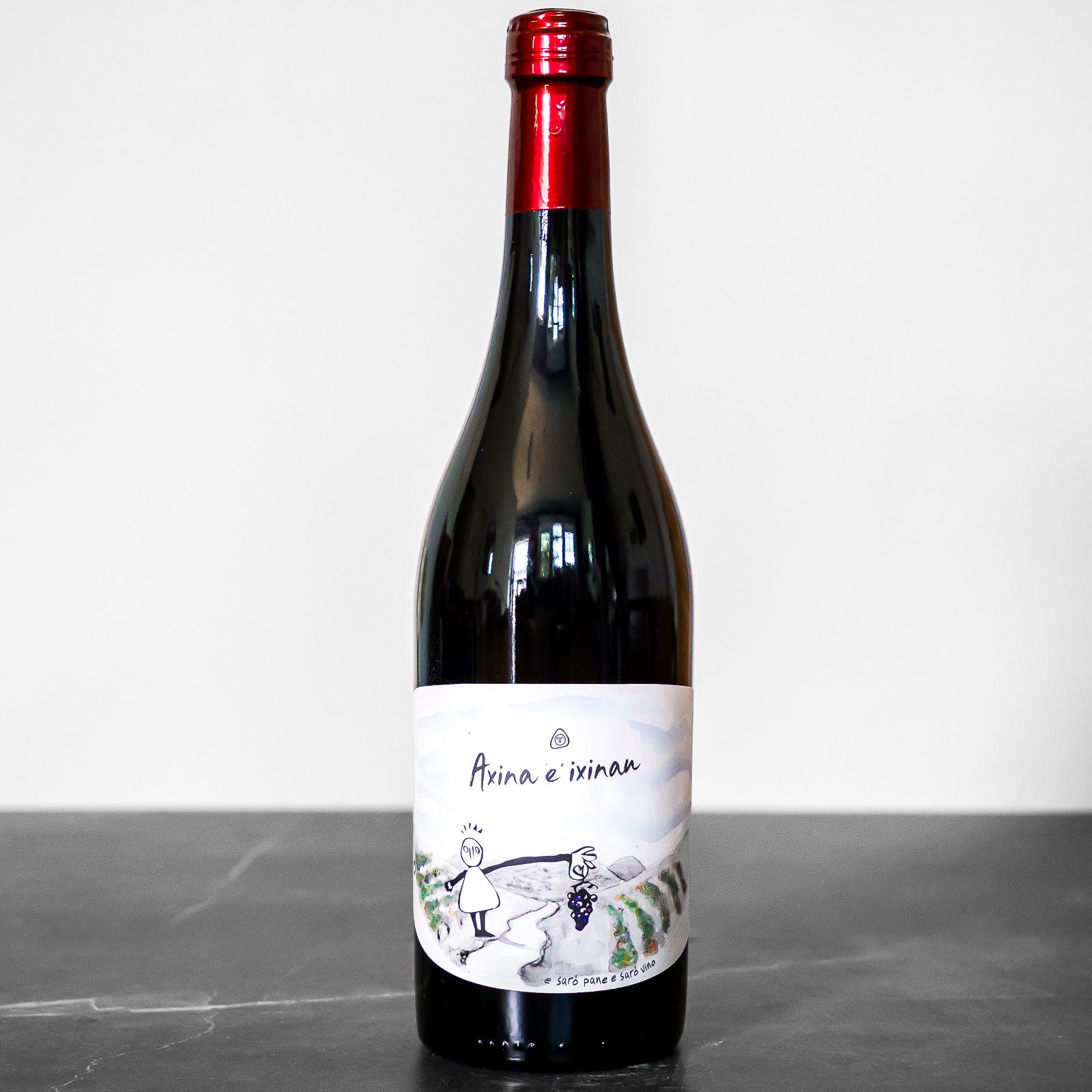
From the Val Trebbia of Western Emilia-Romagna, this is a skin-contact wine composed of Ortrugo, Malvasia di Candia Aromatica, Marsanne, and Trebbiano Romagnolo. Grapes are hand-harvested from 40-90 year-old vines planted to marly/basaltic soils and macerate for 60 days prior to pressing. Spontaneous fermentation and aging for 10 months in 500L Acacia/Chestnut Barrels prior to bottling unfined, unfiltered, no additional SO2.
Shun Minowa
Shun Minowa is a Japanese winemaker based in the wild, limestone-cut hills of Val Trebbia in Emilia-Romagna, where he’s quickly becoming one of the most closely watched names in Italy’s zero-zero scene.
His path runs directly through some of the region’s most influential natural wine voices. Minowa learned under Giulio Armani of Denavolo and spent time at La Stoppa, where he absorbed a deep familiarity with long skin macerations and the structural possibilities of extended contact wines. That influence is clear, but what he’s building now is distinctly his own language.
Minowa works with a strict zero-zero philosophy: no additions, no adjustments, and no sulfur at any stage of vinification. The focus is on patience and extraction—especially through long skin contact—resulting in wines that are textural, structured, and built with real depth.
A key grape in his work is Ortugo, a local variety that lends itself to his style of maceration-driven winemaking. In his hands, it becomes something layered and tactile rather than simply aromatic—wines that lean into tannin, grip, and a slow-unfolding complexity rather than immediate charm.
There’s a clear through-line from his training, but Minowa doesn’t simply replicate the Denavolo or La Stoppa approach. His wines tend to push further into density and structure while still retaining energy and lift. They can be bold, even a little uncompromising at times, but never without purpose.
What defines his work most is commitment. Extended macerations are not a stylistic flourish—they’re the foundation. The wines are left to evolve on their own terms, resulting in bottles that feel deeply natural in the literal sense: uncorrected, unfiltered in intent, and shaped only by fruit, time, and place.
In a region already rich with skin-contact expression, Minowa’s wines stand out for their intensity of focus. They are not designed for easy immediacy. They are built to hold shape, gain complexity, and reveal themselves slowly in the glass.